 Koboshi
Sources checked: 2026-11-08.
Which page covers what?
There are three common ways to study in Japan. Each has its own page.
- Language school: Japanese first, a degree later. See Japan’s language schools in 2026.
- University degree taught in Japanese: needs strong Japanese at entry. See the study route in Japan visa requirements in 2026.
- University degree taught in English: this page, and what your university means for jobs in Japan.
The visa steps every student goes through (the Certificate of Eligibility, documents, proof of funds, the 28-hour work limit and staying after you graduate) are in Japan student visa requirements in 2026.
Can you take a full degree in Japan in English?
Yes. Several Japanese universities teach a whole bachelor’s degree in English and admit students who speak no Japanese yet.
- Waseda’s English-based programs state: “Japanese language ability is not required for application” (Waseda).
- Keio’s PEARL program in economics admits by documents only (IB or SAT, plus TOEFL or IELTS), with no interview and no need to come to Japan for the exam (Keio PEARL brochure, 2026).
- Akita International University (AIU) runs an International Examination of document screening and an English interview, for September entry (AIU admissions).
For students entering from the 2027 school year (from April 2027), Japan’s Immigration Services Agency (ISA) expects B2 Japanese (about JLPT N2) only from students who will take classes or research supervision in Japanese (ISA), so an English-taught degree is outside that rule. The rule for each kind of school is in how much Japanese you need for a Japan student visa.
What is hensachi, and what do the numbers mean?
Hensachi (偏差値, hensachi) is a standard score from Japan’s university mock exams: hensachi = 50 + 10 × (your score minus the average) ÷ the standard deviation (HugKum, Shogakukan).
- The scale: the average is always 50. 60 is one standard deviation above average, about the top 16% of test takers; 70 is about the top 2% (our arithmetic from the normal distribution).
- A university’s hensachi: the prep school Kawaijuku (河合塾, Kawaijuku) publishes a “border” hensachi for each faculty and exam route, the score at which it predicts a 50% chance of passing. Kawaijuku says the figure shows exam difficulty only, not the quality of teaching or a university’s standing in society (Kei-Net).
- What it leaves out: English-track admissions (document screening, interviews, SAT, IB, TOEFL) do not use hensachi, so it does not tell you how hard your English route is. And the people taking these mock exams are already university-bound, so “top 16%” means top 16% of a strong group.
Our view: with exceptions, people who go to a good university in Japan usually get a good job at a good company. A university with a hensachi of 60 or 70 is considered a great university. If you graduate from one and become proficient in Japanese, you have a very high chance of a good job at a good company. If you do not go to one of those universities, the result is still up to you. If you speak several languages, Japanese included, many doors open. It also depends on what you study and what kind of work you want.
Which universities send the most graduates to well-known companies?
The best public measure of where graduates go is the Famous 400 Companies Real Employment Rate (有名企業400社実就職率, yumei kigyo 400-sha jitsu shushoku ritsu) from the education publisher Daigaku Tsushin (大学通信, Daigaku Tsushin): hires at 400 major companies divided by graduates minus those who went to graduate school. The latest edition, released 2026-07-27, lists the top 100 of 552 universities that answered; universities that did not answer, such as the University of Tokyo and Kyoto University, are not listed (Daigaku Tsushin). The 2025 column is the previous edition, as published by Toyo Keizai, 2026-06-26.
| University | 2026 rate | 2026 rank | 2025 rate |
|---|---|---|---|
| Keio | 48.7% | 4 | 46.7% |
| Waseda | 41.0% | 9 | 39.3% |
| AIU | 40.0% | 10 | 35.0% |
| Sophia | 35.3% | 15 | 35.0% |
| Tohoku | 31.8% | 22 | 30.0% |
| ICU | 28.6% | 27 | 28.2% |
| APU | not listed |
APU is not among the 100 universities listed; the list ends at 10.2%. Read these figures with care:
- They count the whole university, Japanese students included, and say nothing direct about English-track international graduates.
- AIU’s class is small, so its rate moves a lot: 25.6% in the 2024 table, 40.0% in 2026.
- The rate leaves out graduates who went to graduate school, which matters in science: among foreign undergraduates in science who finished in the 2024 school year, 60.6% went on to further study in Japan, according to the Japan Student Services Organization (日本学生支援機構, Nihon Gakusei Shien Kiko, JASSO) (JASSO).
Which English-taught degrees should you compare?
These seven cover the main choices: two regional international universities (AIU, APU), four private universities in Tokyo, and one national university.
How selective they are (偏差値)
| University | Faculty (Kei-Net row) | Hensachi |
|---|---|---|
| AIU (Akita) | International Liberal Arts | 62.5 |
| Waseda SILS (Tokyo) | International Liberal Studies | 67.5 |
| Keio PEARL (Tokyo) | Economics, Japanese-exam route | 67.5 |
| ICU (Tokyo) | College of Liberal Arts | 62.5 |
| Sophia FLA (Tokyo) | Liberal Arts | 57.5 |
| Tohoku FGL (Sendai) | Engineering | 62.5 |
| APU (Beppu) | Three faculties | 50.0 to 52.5 |
Source: Kawaijuku’s Kei-Net, faculty rank for the 2027 entrance year: AIU, Waseda, Keio, ICU, Sophia, Tohoku, APU. PEARL itself has no hensachi; the row is Keio’s Faculty of Economics. Tohoku’s row is the Faculty of Engineering, home of the mechanical and aerospace program. Exam-route figures can be higher: AIU’s two written-exam routes are 65.0 and 70.0.
What a year costs at the university (yen)
| University | Tuition per year | Entry fee | Year 1 total |
|---|---|---|---|
| AIU | 896,000 | 423,000 | about 2,070,000 with dorm and meals |
| APU | 1,455,000 (year 1) | 200,000 | 1,655,000 before reductions, plus housing |
| Waseda SILS | not stated | 200,000 | 1,693,000 |
| Keio PEARL | not stated | not stated | 1,508,350 |
| Sophia FLA | 1,172,000 (2026 rate) | 200,000 | 1,668,650 |
| ICU | 1,521,000 (AY2026, with facilities fee) | 300,000 | 1,821,000 |
| Tohoku FGL | 535,800 | 282,000 | 817,800 before housing |
Sources: AIU (year 1 is our sum of tuition, entry fee, the 622,900 first-year dorm with 8 months of meals, and fixed fees), APU, 2027 entry and its application handbook, Benesse for Waseda SILS, 2026 entrants, Keio PEARL brochure (first-year academic fees), Sophia, 2026 entrants, ICU (year 1 is our sum; AY2027 rises to 1,557,000), Tohoku FGL. “Not stated” means the page we read gives no separate figure.
What a month of living costs (yen)
| City | Cheapest: university housing | Typical month |
|---|---|---|
| Akita (AIU) | about 54,000 (year 1 dorm, meals 8 months) | about 91,000 (Tohoku region) |
| Beppu (APU) | 54,800 (AP House 1 and 2, no meals in the fee) | 83,000 (APU’s estimate) |
| Sendai (Tohoku) | about 36,000 (dorm, years 1 and 2) | dorm plus 70,000 to 80,000 (Tohoku’s estimate) |
| Tokyo | 25,750 to 51,350 (ICU dorm) | 141,500 to 204,500 (Keio’s estimate) |
Sources: AIU (622,900 ÷ 11.5 months, our arithmetic), APU AP House fees from April 2027, APU costs, Tohoku FGL, ICU, Keio PEARL brochure. The Tohoku region figure: JASSO’s FY2023 survey of 7,867 privately funded international students found average spending of 133,000 yen a month there, and we subtracted 42,000 for tuition and study costs (JASSO).
What stands out at the five big-city universities?
AIU and APU are compared in the next section.
- Waseda SILS (School of International Liberal Studies), Shinjuku, Tokyo: employers of its 2024 graduates include Mitsubishi Corporation, Accenture, McKinsey and Amazon Japan (Benesse’s reference list); we found no SILS employment rate.
- Keio PEARL (Program in Economics for Alliances, Research and Leadership), Tokyo: up to 100 places a year, starting in September, with a 3.5-year early graduation offered partly “to encourage September enrollees (PEARL students) to find employment in Japan” (Keio PEARL brochure).
- Sophia FLA (Faculty of Liberal Arts), Yotsuya, Tokyo: spring and autumn intakes (Sophia FLA).
- International Christian University (ICU), Mitaka, Tokyo: ICU describes its education as Japanese-English bilingual (ICU); applicants with no Japanese use English Language Based Admissions and then take ICU’s Japanese Language Program (ICU English admissions). Benesse lists a 91.1% employment rate for the July 2024 and March 2025 graduates (Benesse).
- Tohoku FGL (Future Global Leadership), Sendai: three English programs only (molecular chemistry, mechanical and aerospace engineering, and marine biology), with October entry. FGL recommends eight applicants for the scholarship of Japan’s education ministry (MEXT), 119,000 yen a month for four years (Tohoku FGL).
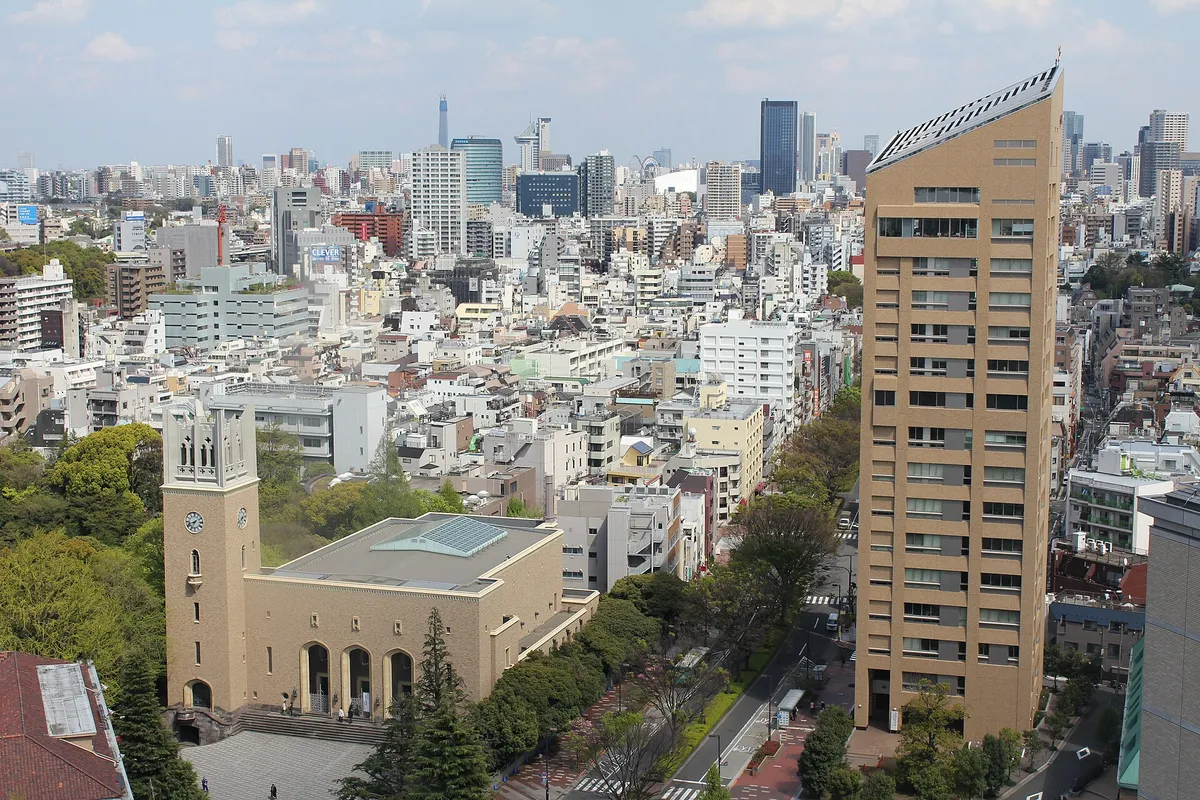
Photo: XIIIfromTOKYO, CC BY-SA 3.0, Wikimedia Commons, cropped
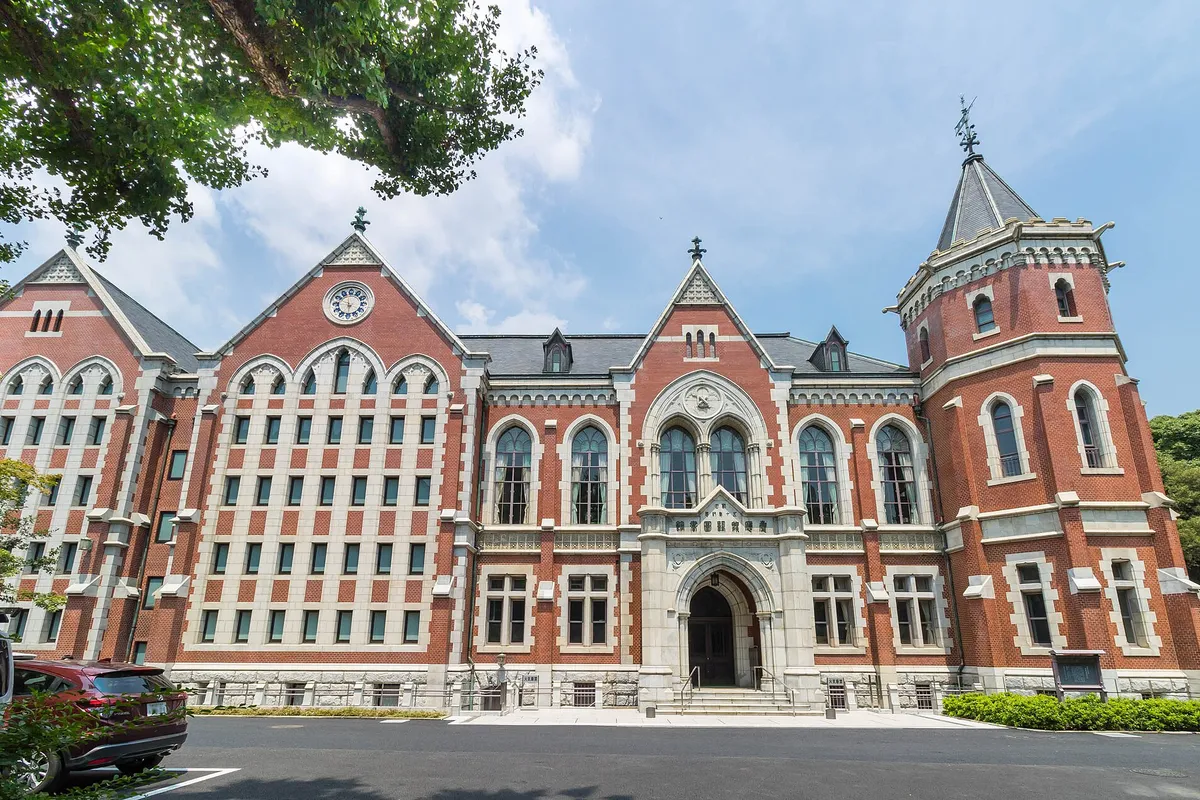
Photo: Kakidai, CC BY-SA 4.0, Wikimedia Commons, cropped
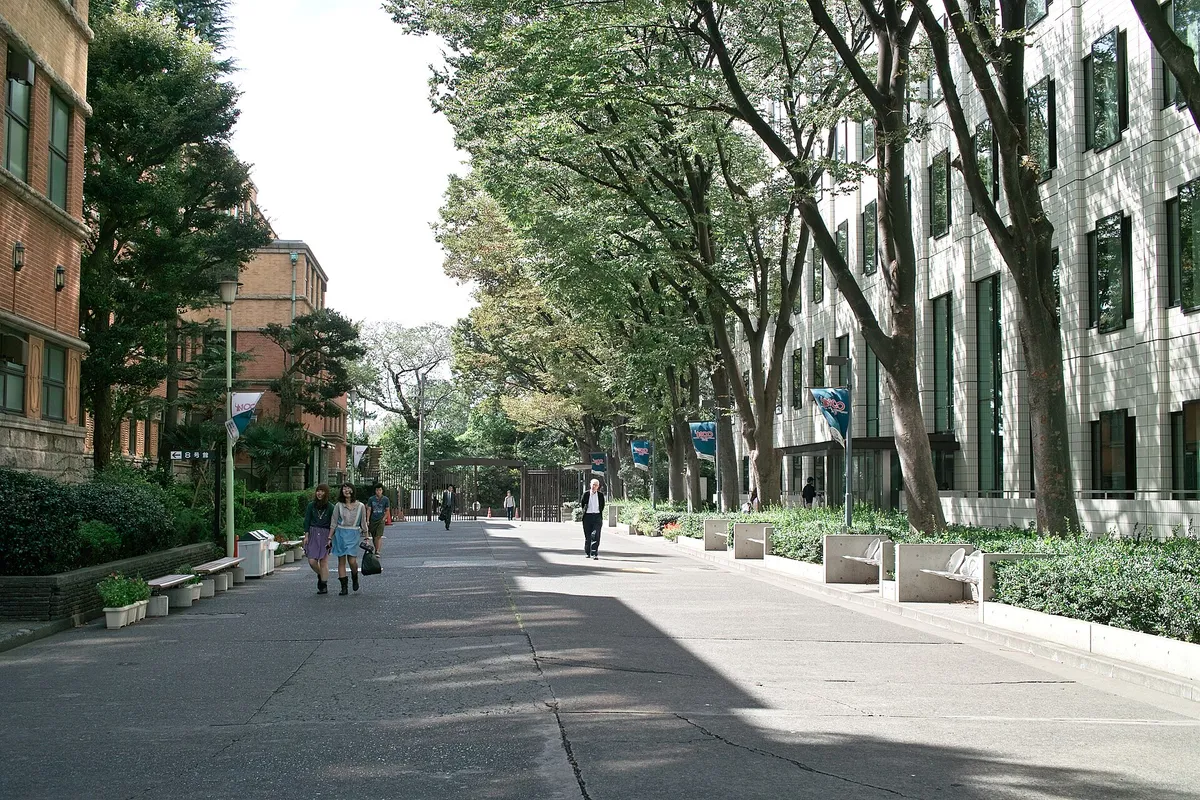
Photo: Keiichi Yasu, CC BY-SA 2.0, Wikimedia Commons, cropped
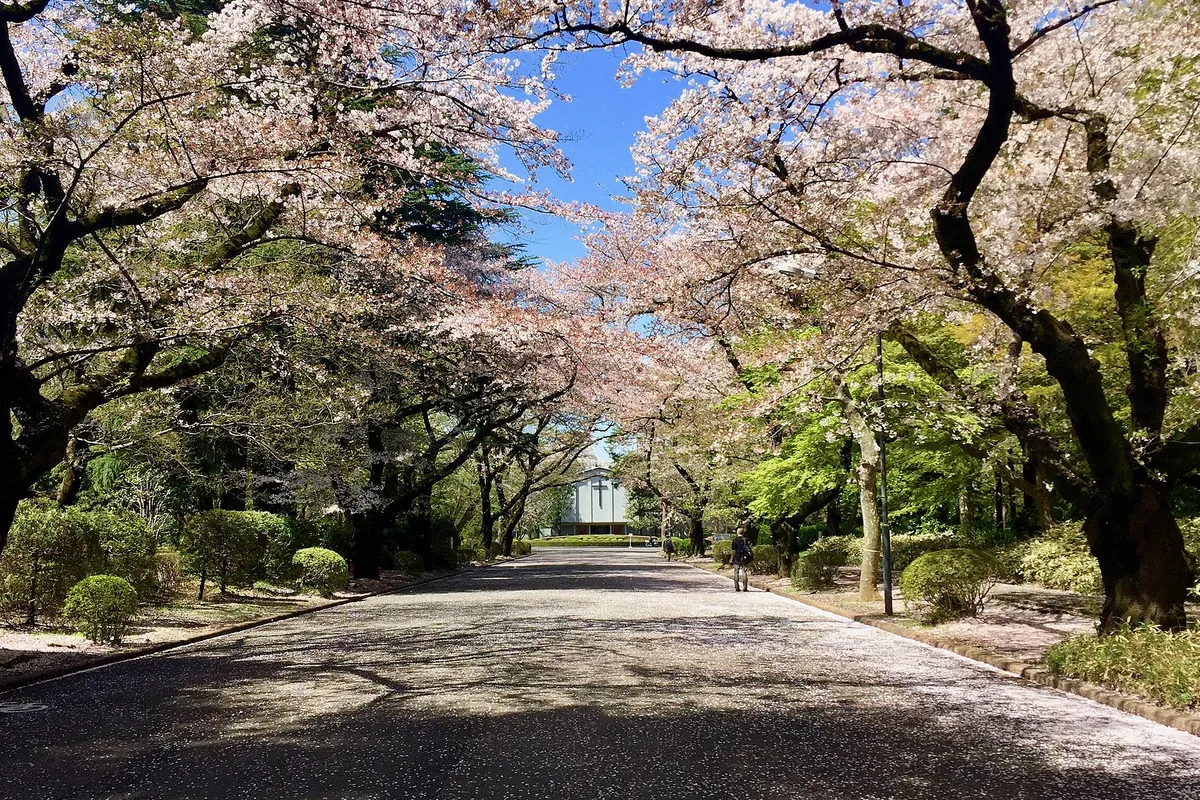
Photo: Almondchoco, CC BY-SA 4.0, Wikimedia Commons, cropped
AIU or APU: which fits you?
Akita International University (AIU, 国際教養大学, Kokusai Kyoyo Daigaku) and Ritsumeikan Asia Pacific University (APU, 立命館アジア太平洋大学, Ritsumeikan Ajia Taiheiyo Daigaku) are small regional campuses built around international students. AIU states that classes are taught 100% in English (AIU); APU undergraduates “can study on an English or Japanese basis while learning the other language” (APU admissions). Four things decide between them.
- Who you live with: on 2026-05-01, 3,274 of APU’s 6,699 students (48.9%) were international, 417 of the undergraduates from Indonesia (APU). At AIU, many international students share their first-year room with a Japanese roommate or suitemate (AIU housing), daily contact that helps your Japanese.
- Price: AIU’s tuition is 896,000 yen a year. APU’s is 1,455,000 in year 1 and 1,655,000 after, before its tuition reductions of 30, 50, 65, 80 or 100%. AIU’s scholarship page lists no grant aimed at international degree students (AIU scholarships), so with a 50% reduction or more, APU can cost less.
- Jobs: AIU reports a 99% job placement rate for the 2024 school year, with no separate figure for international degree students (AIU careers), and 40.0% in the 400-company table. Of APU’s 617 international graduates in the year to March 2026, 300 received a job offer (48.6%, our arithmetic) (APU career data); APU is not on the 400-company list.
- Your year abroad: AIU requires a year abroad to graduate (AIU, 2023-07-31), usually between the winter of year 2 and the autumn of year 3 (AIU). That is a year away from daily Japanese right before job hunting, so take N2 before you leave.
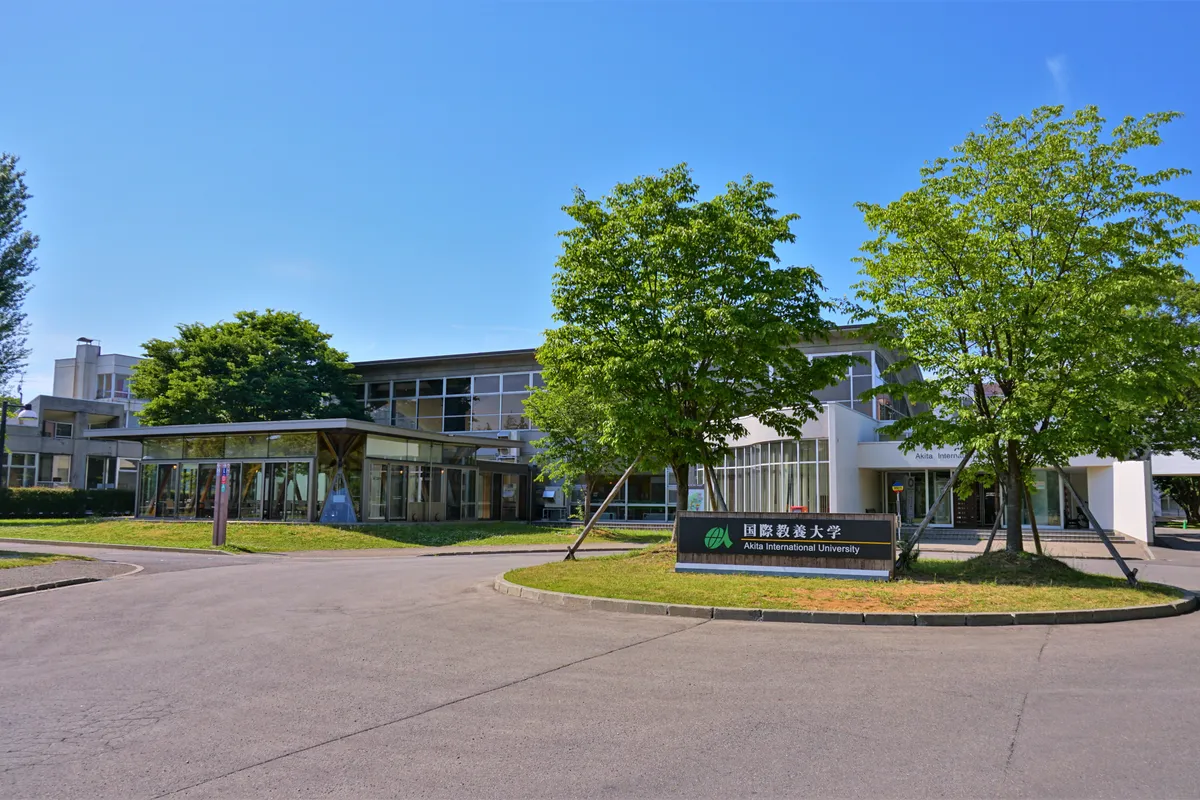
Photo: 掬茶, CC BY-SA 4.0, Wikimedia Commons, cropped
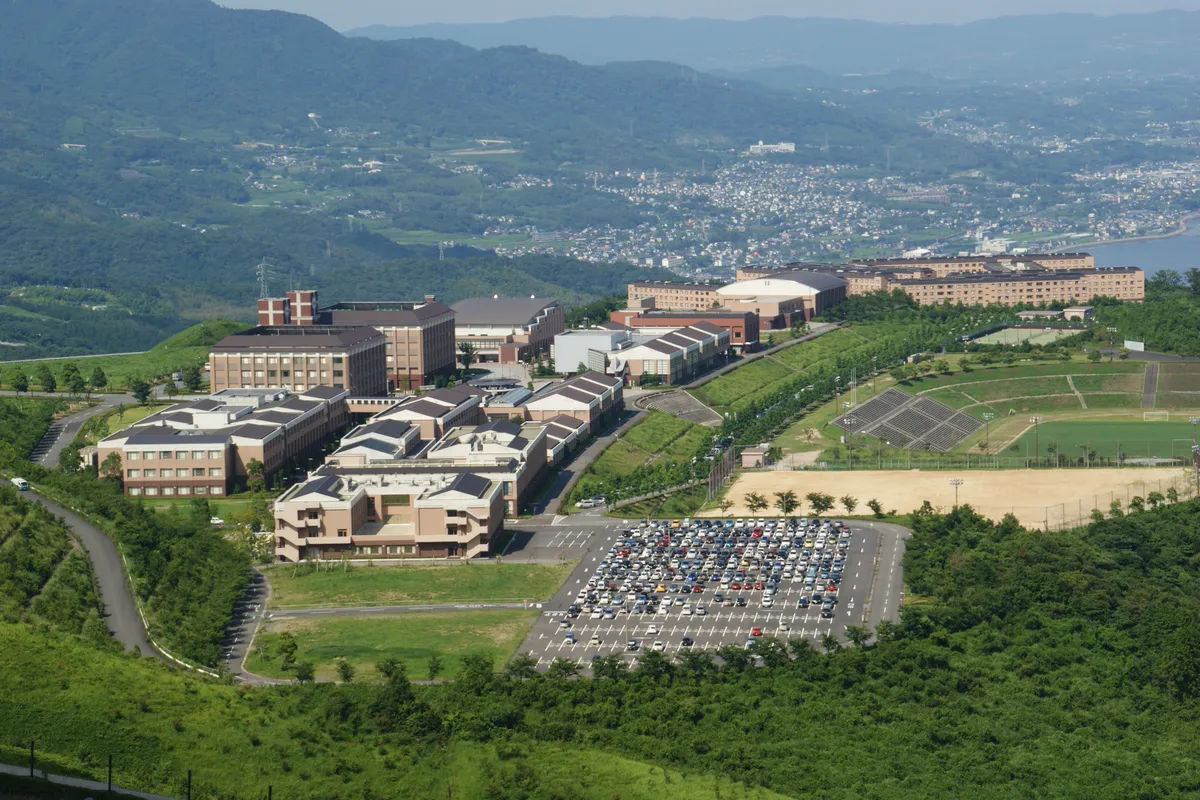
Photo: JKT-c, CC BY 3.0, Wikimedia Commons, cropped
Our view: if you want a Japanese company and can afford it, AIU’s hiring record and its Japanese roommates give you the stronger start. If cost decides it, apply to both and compare APU’s reduction offer with AIU’s price before you choose.
Do you still need Japanese if your degree is in English?
Yes, for a job at a Japanese company. The degree is in English, the hiring is mostly in Japanese: entry sheets, aptitude tests, interviews and the job itself.
- Your competition already has it: in JASSO’s FY2023 survey of privately funded international students, 81.3% of undergraduates who want a job in Japan held N2 or N1 (N1 48.5%, N2 32.8%) (JASSO, FY2023 survey).
- What companies ask for: in a December 2023 survey by the recruitment company DISCO of companies that hire or plan to hire highly skilled foreign staff, 21.6% of those hiring humanities graduates and 27.9% of those hiring science graduates asked for less than business intermediate Japanese at the job offer; after joining, 66.6% and 59.4% want business advanced or native (Kansai Economic Federation bulletin, Jinjibu).
- What you study changes the path: of foreign students who finished a four-year degree in Japan in the 2024 school year, 39.2% took a job in Japan. In the humanities and social sciences it was 46.8% and 46.9%; in the sciences 17.0%, and in engineering 29.6% (JASSO, May 2026).
- How long N2 takes: JASSO puts the level needed for university classes at about N1 or N2, a level “said to take 600 to 900 hours or more” of study (JASSO). About 1.5 hours a day outside class is roughly 550 hours a year, or 1,100 hours by the end of year 2 (our arithmetic). Our estimate: starting from A1 or A2, N2 by the end of year 2 is realistic with daily study; learners from countries that do not use kanji should plan for more time.
- When hiring starts: for students graduating in the 2027 school year, company information sessions open on March 1 just before the final year, selection from June 1 and formal offers from October 1 (Cabinet Secretariat, 2026-03-24). A September start (AIU, PEARL, APU’s autumn intake) may leave you only about two and a half years before information sessions open; ask your career centre in year 1 which hiring year you will join. Register for the JLPT early: for December 2026, registration closed on September 3, before its September 7 deadline (JEES).
- Still below N2 in year 3: sit N2 in December, and look at companies that ask for less, at international employers, at graduate school in Japan, or at a Japanese company in your home country.
The Japanese level each work visa asks for is on the Japanese level for each Japan visa, with JLPT levels matched to CEFR in its JLPT and CEFR table. Staying on to start a job or look for one: what you can do in Japan after you graduate.
Our view: treat N2 as the floor for most jobs at Japanese companies, and N1 as the level that makes you competitive. For an engineer, a strong English-taught degree plus N2 can be enough. For a marketing or sales job, aim for N1.
Before you apply: Fees, intakes and scholarships change every year. Check each university’s admissions page for your entry year, and check ISA’s pages for the student visa rules on the day you apply. Sources last checked: 2026-11-08.


